A Vaccine Nation?
Vaccination is a controversial subject stirring up a heated debate about its use. Many people believe that vaccinating themselves and their children seems like a good idea. They feel vaccines are safe, effective medical tools that are supposed to protect us against dangerous infectious diseases. However, others think differently, such as Dr. Gary Null.
In his film "Vaccine Nation," Null projects vaccines as dangerous substances and holds them responsible for autoimmune diseases, infections, allergies and a massive increase of developmental learning and behavioral disorders in children, such as autism. He attempts to unveil the truth about the history of vaccines and how they have never been proven to be safe and effective for anyone. In addition, he accuses the nation of governmental deception and cover-ups associated with vaccines as well as corruption within the scientific community and how vaccine studies are seriously flawed (Citation 15).
According to the trailer, Null argues that "with the number of vaccinations given to infants and children rising, kids are receiving doses of toxic mercury and other heavy metals well above environmental safety levels." Yet with the evidence found, "mercury, known as thimerosal, and other heavy metal additives are highly toxic and threaten children with neurological damage. The long-term efficacy of global vaccination remains controversial, inconclusive and is suspect in light of the powerful corporate interests, lobbying efforts, and profits associated with a multi-billion dollar vaccine industry" (Citation 15) . | 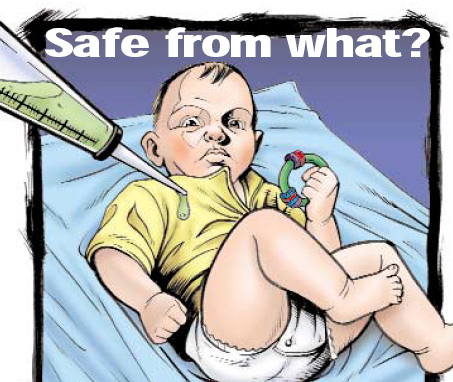 |
Vaccine Exemption
American children currently receive 28 doses of vaccines by age 2 if they get all the immunizations recommended by the Centers of Disease Control and Prevention. 77% of kindergartners in the U.S. are completely up to date on their vaccinations, partly because schools require it. However, two to three percent of school-age children in the U.S. do not receive any vaccinations at all because their parents have received a religious or philosophical exemption from state requirements (Citation 16). Is this fair?
Parents of unimmunized kids rely on so-called herd immunity to keep their children safe. The concept of herd immunity is "if most people around you are immune to an infection and can't get sick, then there is no one around to infect you, even if you aren't immune to the infection. For example, rates of invasive disease caused by the Streptococcus pneumoniae bacteria went down in unvaccinated children after the Prenvar vaccine began to be routinely used. This is likely because of the herd immunity effect of the kids who were vaccinated with Prevnar. Herd immunity only works if immunization rates in a community are high though, and can range for 85% for diptheria to 92% for pertussis or whooping cough " (Citation 17).
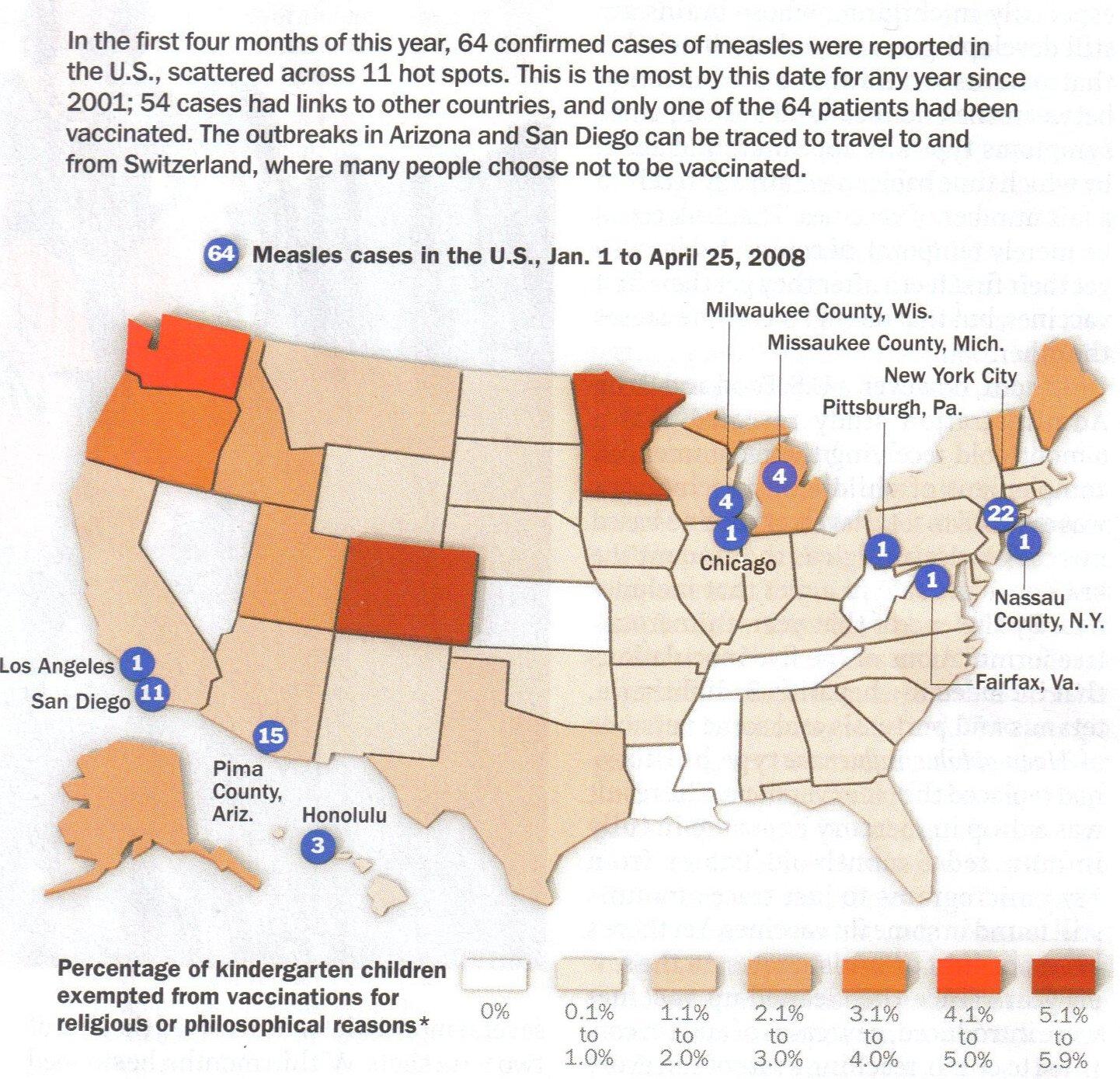
Infectious microorganisms still exist worldwide, and pockets of intentionally unvaccinated children provide a perfect place for diseases to take hold. This could lead to outbreaks that spread to other unprotected kids, then to infants and the elderly. If this trend continues, "it's possible that once rampant diseases such as measles, mumps and whooping cough will storm back, even in developed nations with robust public-health programs. That is forcing both policymakers and parents to wrestle with a dilemma that goes to the heart of democracy: whether the common welfare should trump the individual's right to choose. Parents torn between what's good for the world and what's good for their child will - no surprise - choose the child. But even then, they wonder if that means to opt for the vaccines and face the potential perils of errant chemistry or to decline the vaccines and face the dangers of the bugs. There is, as yet, no simple solution, but answers are emerging" (Citation 16).
Autism and Vaccines?
In February 1998, scientist Andrew Wakefield at the Royal Free Hospital in London announced that he and his colleagues had found severe intestinal inflammation in eight of the 12 children involved in their study that they believed was caused by the MMR (measles, mumps, rubella) vaccine. The striking thing was that nine of the 12 children also had autism, and the disease had struck between one and 14 days after receiving the vaccine. Though the scientists noted in the respected scientific journal The Lancet that, "we did not prove an association" between the MMR vaccine and autism, Wakefield said, "It's a moral issue for me, and I can't support the continued use of [the MMR vaccine] until this issue has been resolved." Though this was only a collection of 12 case reports, the media created mass hysteria and the autism vaccine scare was started (Citation 18). |  Andrew Wakefield |
One chemical common to vaccines at the time was thimerosal, a preservative which contains 50% ethylmercury by weight. On July 7, 1999, the American Academy of Pediatrics and the U.S. Public Health Service issued a warning about thimerosal. Though experts said there was "no data or evidence of any harm", the cumulative exposure children receive to mercury from vaccines "exceeds one of the federal safety guidelines" for mercury. In many people's eyes, this even more strongly linked vaccines to causing autism. By 2003, most childhood vaccines (except the influenza vaccine) did not contain any thimerosal.
Since then, many large-scale studies have been done that have found no link between autism and childhood vaccinations containing thimerosal. On March 10, 2004, ten of Wakefield's coauthors formally retracted their suggestion that the MMR vaccine and autism were linked. Wakefield, convinced a connection existed, did not join them. The U.S. Institute of Medicine reached the conclusion in 2004 that since autism symptoms typically appear at the same age that children get the MMR vaccine, it was coincidence that some children would first show signs of autism after being vaccinated. On February 12, 2009, the U.S. vaccine court issued a ruling that neither thimerosal-containing vaccines nor the MMR vaccine can cause autism. However, parents of autistic children and activists convinced a link exists have vowed to fight on (Citation 18).
Financing
 | Within the context of immunization financing, "it has recently become more critical as some donors have reduced their funding for immunization programs; as other health priorities, such as HIV/AIDS,
compete for limited health funding; and as other countries try to increase coverage, to improve immunization safety and to add new, more expensive vaccines such as hepatitis B (Hep B) [...] to their national immunization programs.
The immunization financing issue is set to become even more important when vaccines currently in the pipeline, such as rotavirus, […] and other new vaccines, hit the market (Citation 19). |
As a result, experts "estimated the possible effects of the next influenza pandemic in the United States and analyzed the economic impact of vaccine-based interventions. Using death rates, hospitalization data, and outpatient visits, [they] estimated 89,000 to 207,000 deaths; 314,000 to 734,000 hospitalizations; 18 to 42 million outpatient visits; and 20 to 47 million additional illnesses. Patients at high risk (15% of the population) would account for approximately 84% of all deaths. The estimated economic impact would be $71.3 to $166.5 billion, excluding disruptions to commerce and society. At $21 per vaccine, [they] project a net savings to society if persons in all age groups are vaccinated. At $62 per vaccine and at gross attack rates of 25%, [they] project net losses if persons not at high risk for complications are vaccinated. Vaccinating 60% of the population would generate the highest economic returns but may not be possible within the time required for vaccine effectiveness, especially if two doses of vaccine are required" (Citation 20).
Our Best Shot
Despite the common criticism about their efficacy, safety, and reliability, vaccines have demonstrated their overwhelming potential to obliterate infectious diseases threatening life on our planet. For example, "when the new vaccine for FIV (Feline Immunodeficiency Virus) was announced in March, 2002, it met with enthusiasm from the medical community, not only for its" benefit to cats, but also its prototypical significance against HIV/AIDS (Citation 21). Moreover, healthcare providers to the public are obligated to help improve the livelihood of the community by providing the necessary hands in treating patients. However, medical practitioners must honor the patient's choice, for it is up to individuals in our society to make their own decisions whether or not to get immunized against nature's microscopic dangers (Citation 22). | 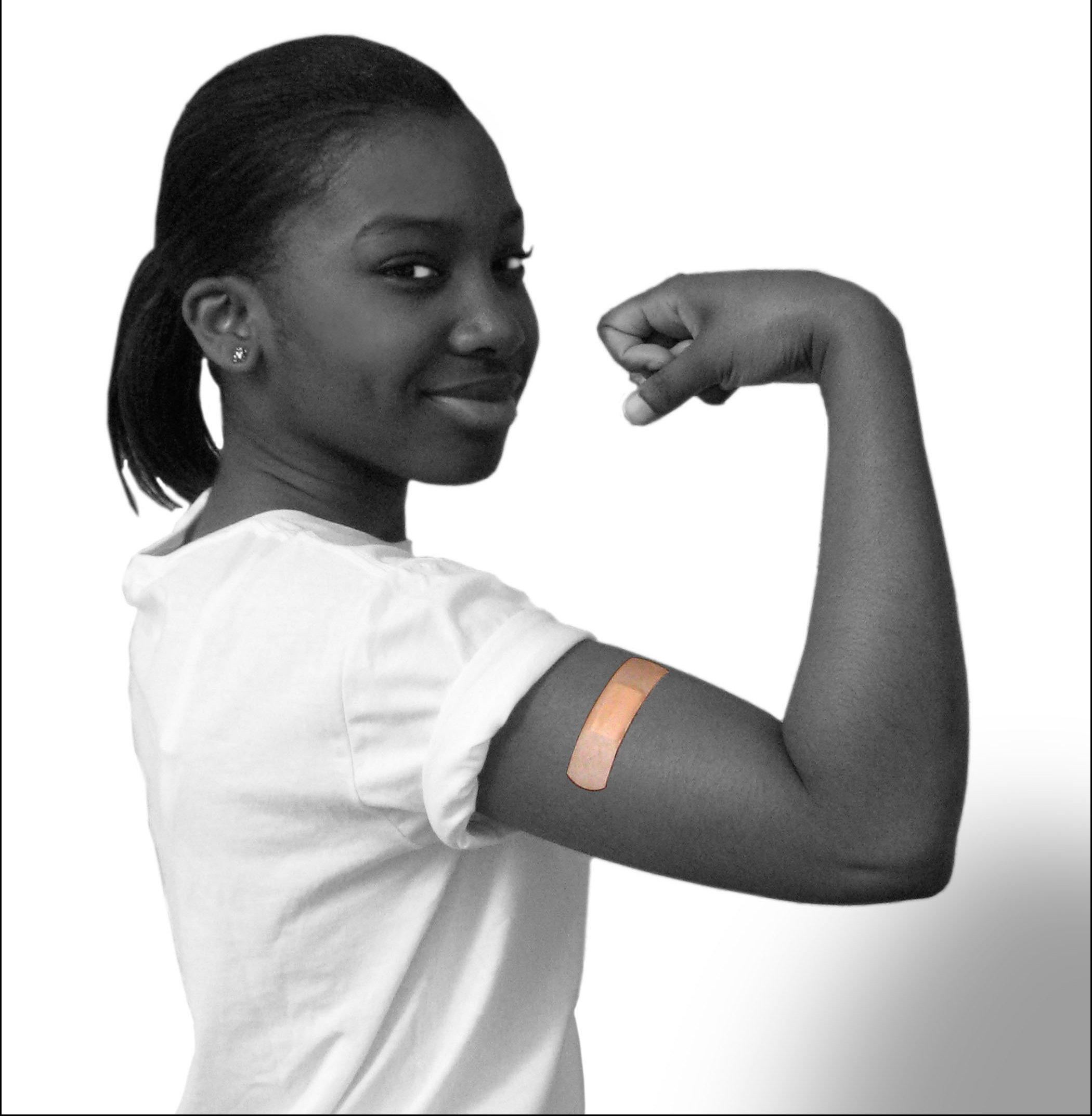 |
Innovations: Previous Page | Next Page: Citations |
